


In a world where agility is celebrated and speed is rewarded; it is tempting to make decisions based on expediency rather than integrity. Yet in times of disruption, technological, environmental, or social, only values-based decisions endure. And that is why Values Intelligence (VQ) is becoming the defining trait of Regenerative Leadership.
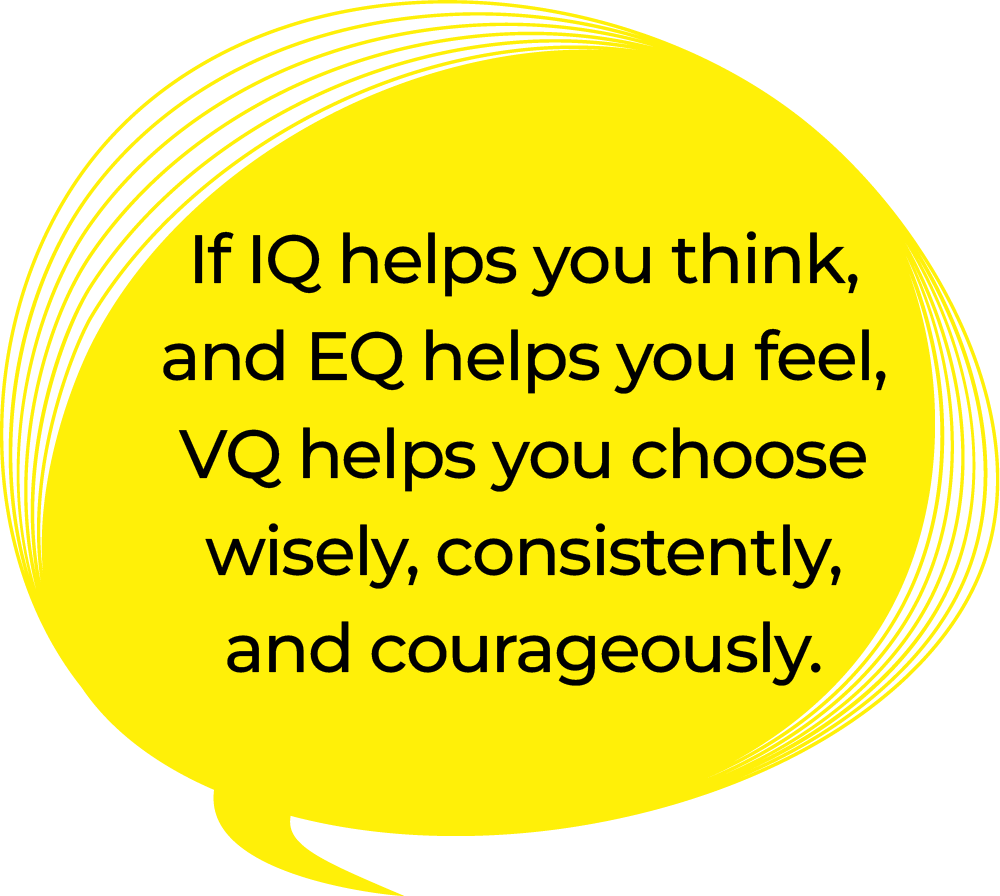
If IQ helps you think, and EQ helps you feel, VQ helps you choose wisely, consistently, and courageously.
While Emotional Intelligence is now a mainstream leadership expectation, Values Intelligence remains an unspoken differentiator. It’s not simply about having values, but about how intelligently and consciously those values are applied across complex leadership decisions.
VQ is the discipline of staying anchored in what matters most, especially under pressure.
In today’s climate, where businesses are navigating competing priorities, profit vs people, speed vs sustainability, growth vs responsibility, leaders without a strong VQ are prone to drift. They either cave to short-term incentives or adopt borrowed values that sound good in boardrooms but don’t live in practice.
This is where Regenerative Leaders rise above the crowd.
Before they regenerate systems, regenerative leaders regenerate themselves. They build their internal compass through reflective practice, philosophical inquiry, and alignment between their identity and their impact.
They make a conscious commitment to:
They refuse to separate who they are from how they lead.
.
In this way, Values Intelligence is not soft, it’s sovereign
In the coming decade, AI will increasingly dominate workflows, decisions, and even human interactions. Algorithms may be neutral, but the humans who train and deploy them are not. Values Intelligence becomes the ethical backbone in a world where machines can now outperform humans cognitively and logistically.
Leaders with high VQ ask:
In this light, Regenerative Leadership becomes both a values system and an operating system, especially relevant for AI-era decision-making and ESG accountability.
Many companies display values on walls. Regenerative Leaders engrave them into their choices. Whether it’s choosing not to work with harmful industries, prioritizing psychological safety, or turning down opportunities that compromise their ethos, they embody compassionate advantage over competitive advantage.
And by doing so, they build trust, loyalty, and legacy; intangible assets that can’t be coded or automated.